Technical Gear: Climbing boots (double boots like La Sportiva G2/Sportiva Baruntse). Crampons (compatible with your boots). Ice axe. Climbing harness. Helmet. Carabiners (locking...
Technical Gear:
Climbing boots (double boots like La Sportiva G2/Sportiva Baruntse). Crampons (compatible with your boots). Ice axe. Climbing harness. Helmet. Carabiners (locking and on-locking). Ascender (Jumar).Belay/rappel device (ATC or figure 8). Prusik loops / slings.
Clothing:
Down jacket (800 fill or higher). Base layers (synthetic or merino). Insulated gloves and mittens. Waterproof jacket and pants. Warm hat and balaclava. Buff/neck gaiter
Personal:
Headlamp with extra batteries. Sunglasses (category 4 recommended). Sunscreen + lip balm (SPF 50+). Water bottles and/or hydration bladders. Water purification (tablets, Steripen, etc.). Sleeping bag (-20°C or better). Trekking poles. Snacks (energy bars, gels)
Important: Should you require any equipment or need to hire items, most are available locally. Please notify your guide in advance to ensure availability and proper arrangements.
The Island Peak and Ama Dablam expeditions offer two rewarding climbing experiences, combining high-altitude adventure with classic mountaineering routes.
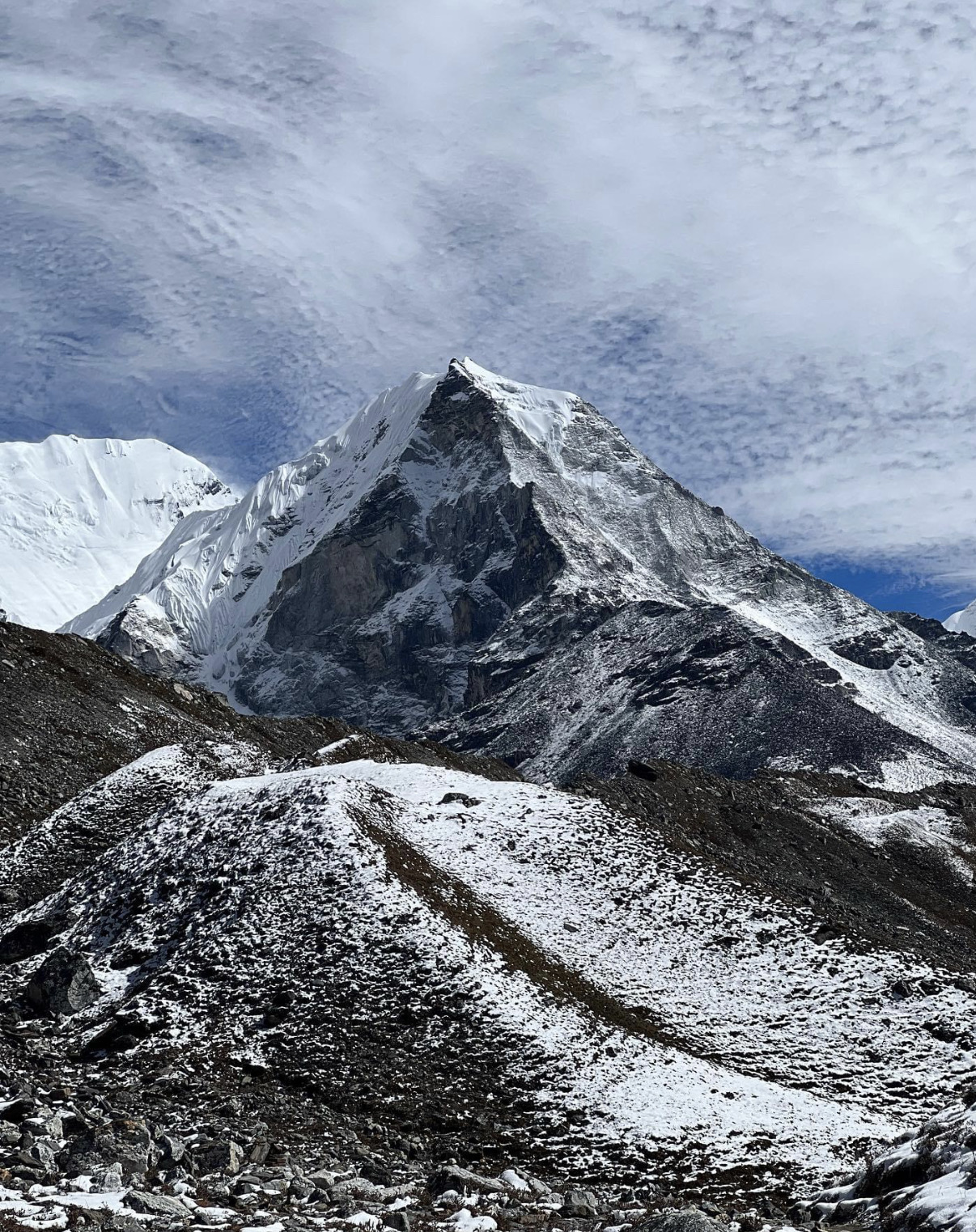
Island Peak (6,189 m) is well suited to those taking their first steps into Himalayan climbing. The ascent includes glacier travel, fixed ropes, and a narrow summit ridge, providing valuable experience and impressive high-mountain views. It is ideal for learning basic alpine skills in a real expedition setting.
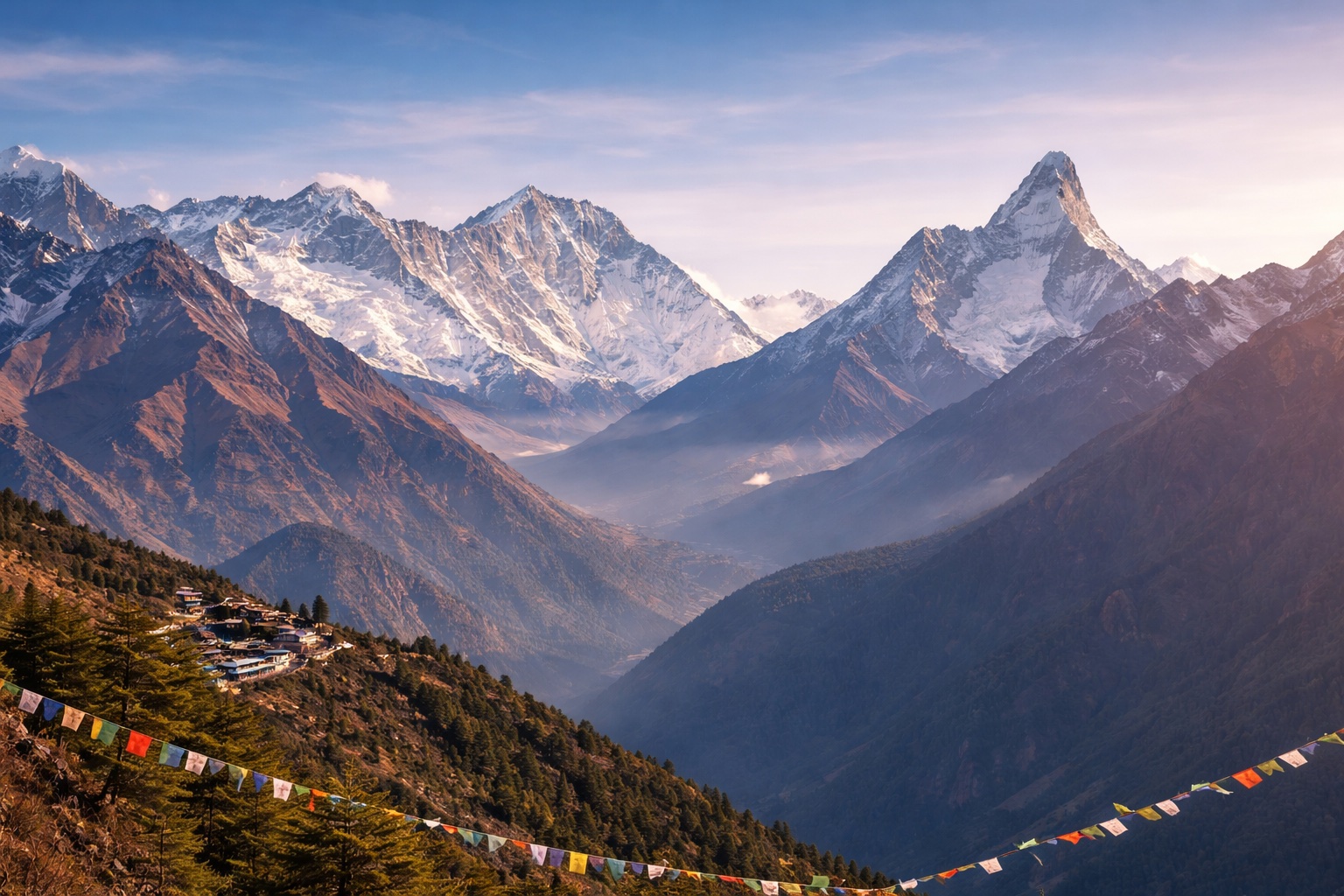
Ama Dablam (6,812 m) is renowned for its steep and technical character. The route involves sustained sections of rock, snow, and ice along exposed ridges, demanding strong climbing skills and good endurance. Its elegant shape and challenging nature make it one of the most respected climbs in the Himalaya.
To support a safe and confident ascent, a technical climbing course is provided at base camp during a scheduled rest day. This training covers the use of fixed ropes, ice axe techniques, crampon skills, and basic rescue procedures, helping to improve skills and acclimatisation before the summit push.
Together, these expeditions present a balanced mountaineering journey, from skill development on Island Peak to a serious technical challenge on Ama Dablam.
Arrive Kathmandu (1350m). Transfer to the hotel
Your memorable holiday begins in Kathmandu. After arrival, you will have time to freshen up before meeting your guide for an afternoon briefing. This is the perfect moment to organize your trekking gear and prepare your bags for the journey ahead.
Accommodation: Hotel. Meals included: morning
Transfer: 20 M drive hotel.
Kathmandu - Drive Ramechhap - Flight Lukla (2860 m) - Trek to Phakding (2610 m)
Early in the morning, we drive to Ramechhap (Manthali Airport), which takes about 4 to 5 hours depending on traffic and road conditions. From Ramechhap, you'll board a short 20 minute flight to Lukla, the main gateway to the Everest region. Upon arrival in Lukla, the trek starts with a gradual descent through alpine forests, suspension bridges, and charming Sherpa villages. After 3 to 4 hour walk, you’ll reach Phakding, a scenic riverside village and the first overnight stop on the trail toward Everest Base Camp.
Note:
Due to potential congestion at Kathmandu Airport, the Civil Aviation Authority of Nepal (CAAN) may mandate that all flights to Lukla operate either from Kathmandu Airport or from Ramechhap Airport.
In the event that the flight is canceled due to adverse weather conditions, it will be rescheduled for the following day. An additional night’s accommodation will be provided either in Kathmandu or Ramechhap, depending on the point of departure.
Accommodation: lodge. Meals included: morning noon evening.
Phakding - Namche Bazaar (3440 m)
Today, we starts with a pleasant walk through a pine forest along the river, followed by a short climb out of a narrow gorge. After passing the entrance to Sagarmatha National Park, where permits are checked, we descend to cross the river on a suspension bridge. The trail continues through a wooded valley, crossing the river again before reaching a confluence from Thame and the Khumbu. A final crossing on a high suspension bridge marks the start of a challenging 1.5 hours ascent to Namche Bazaar, with our first views of Everest midway.
Upon arrival, we check into a local lodge. Once a quiet village, Namche has evolved into a bustling trekking hub, offering a mix of tradition and modernity - complete with bakeries, cafés, pubs, and other comforts brought back by well-traveled Sherpas.
Accommodation: lodge. Meals included: morning noon evening.
Elevation gain: 1178 m . Elevation loss : 409 m . 6/7 hours walking.
Acclimatization day in Namche Bazaar
Finally, well-deserved rest day to acclimatize and enjoy the surroundings. For those inclined, a hike to the Everest View Hotel (3,880 m) offers awesome scenic views of the Himalayas. Alternatively, you may choose to explore Namche Bazaar - relax in a local café, browse the lively market for unique items, or visit the Sherpa Museum to gain insight into local culture. The day concludes with an overnight stay in this iconic mountain village.
Accommodation: lodge. Meals included: morning noon evening.
Namche Bazaar - Tengboche (3860 m)
After breakfast, enjoy a short climb and stay along a well-maintained trail, built with tourist donations, giving the feel of walking on a natural balcony. You then descend through pine forests and cross the Dudh Koshi River via suspension bridges. At Phunki Thenga, the trail rises steeply through rhododendron and pine trees. The day ends in the peaceful village of Tengboche, surrounded by breathtaking natural scenery, from Tengboche.
Accommodation: lodge. Meals included: morning noon evening
Elevation gain: 921 m. Elevation loss : 700 m. 5/6 hours walking.
Tengboche - Dingboche (4410 m)
A perfect day following the Hillary Trail. Walk through lush forests and descend to the Imja River and cross it. Then gently ascend toward Dingboche; the climb is easy because it is not steep. Pass Pangboche village with views of Ama Dablam and Himalayan peaks. End the day in Dingboche with a warm welcome.
Accommodation: lodge. Meals included: morning noon evening
Elevation gain: 550 m . Elevation loss : 273 m. 6 hours walking.
Acclimatization day in Dingboche
The hike from Dingboche to Nagarjun Hill helps your body adjust to high altitude and prevents altitude sickness. The gentle climb allows your lungs and heart to adapt while you enjoy stunning Himalayan views. Optional visits around the village can also be done on this rest or acclimatization day.
Dingboche - Chhukung (4730 m)
Today is a short and scenic acclimatisation walk. We slowly climb through open yak pastures and glacial valleys, enjoying fine views of Ama Dablam, Lhotse and Island Peak. The walk is gentle, with no steep sections, as the trail follows the Imja Valley eastwards. Passing stone-walled fields and crossing small streams, we arrive at the small village of Chhukung, set beneath impressive mountain peaks.
Accommodation: lodge. Meals included: morning noon evening
Elevation gain: 395 m . Elevation loss : 00 m. 3 hours walking
Chhukung - Island Peak Base Camp (5100 m)
Leaving Chhukung, the trail heads south-east through the Imja Valley, climbing gradually over moraines and glacial streams. This is a short walking day, allowing time to rest and acclimatise. In the afternoon, there is a training session at Base Camp to practise essential climbing techniques and use of equipment in preparation for the ascent.
Accommodation: Tent. Meals included: morning noon evening
Elevation gain: 382 m . Elevation loss : 15 m. 4 hours walking.
Reserve day
Summit day - Island Peak summit (6189 m) and descend to Chhukung
Start very early, around midnight. Climb along rocky trails to the glacier, then up snowy slopes using fixed ropes. Reach the summit and enjoy stunning views of Lhotse, Ama Dablam, and the surrounding peaks. Descend safely back to Base Camp, have hot soup, rest briefly, then pack up and continue down to Chhukung. A long but highly rewarding day.
Accommodation: Lodge. Meals included: morning noon evening
Elevation gain: 1060 m. . Elevation loss: 2028 m. 8/11 hours walking.
Chhukung - Pangbuche - Ama Dablam Base Camp (4570 m)
The descent to Pangboche is easy. From there, it is a pretty good climb on a clear and well-defined trail up to base camp.
Accommodation: Tent. Meals included: morning noon evening
Elevation gain:
662
m. . Elevation loss: 810 m. 6 hours walking.
Rest day at Basecamp - Acclimatization walk & Technical Training Day
Rest day at base camp with a short acclimatisation walk and a technical climbing training session. The day is used to practise rope work, crampon and ice axe techniques, check equipment, and prepare safely for the upcoming climb.
Accommodation: Tent. Meals included: morning noon evening
AD B. C - Camp 1 (5700 m)
The route climbs along a rocky trail and grassy slopes, following a narrow ridge with some loose rocks that require careful footing. Camp 1 is set on a small, level area above the ridge, offering impressive views. Tents are placed close together on rocky platforms and are often exposed to wind and cold conditions.
Accommodation: Tent. Meals included: morning noon evening
Elevation gain: 711 m . Elevation loss : 86 m . 3 hours of walking.
Camp 1 - Camp 2 (6040 m)
This is a short but technical climb of 4-5 hours over mixed terrain, including rock slabs, snow patches, and fixed ropes. The route has exposed sections and passes the famous Yellow Tower, a near-vertical rock wall requiring concentration and solid rope skills. Camp 2 is located on a narrow ledge with limited space, surrounded by steep drops and breathtaking views.
Accommodation: Tent. Meals included: morning noon evening
Elevation gain: 340 m . Elevation loss : 00 m . 3 hours of walking.
Summit Day (6812 m) - back to Camp 2 or Camp 1
The ascent is challenging but rewarding, with exposed and slippery rocky sections that require careful footing. Fixed ropes secure the steep rock and snow terrain, including the famous narrow Mushroom Ridge. From the summit of Ama Dablam, there are spectacular 360-degree views of Everest, Lhotse, Makalu, and the Khumbu Valley. After a short rest at the top, the descent is safely made back to Camp 2 or Camp 1 under the guidance of our experienced Sherpa team.
Accommodation: Tent. Meals included: morning noon evening
Elevation gain: 772 m . Elevation loss : 772/ 1112 m . 3 hours of walking.
Camp 2 or Camp 1 - Base camp
Descend carefully, retracing the route back to base camp.
Accommodation: Tent. Meals included: morning noon evening
Reserve day
Please consult with your guide to discuss your options. If you plan to fly from Lukla to Kathmandu, let us know in advance so we can change the hotel reservation and arrange your flight ticket.
Accommodation: Lodge/Tent. Meals included: morning noon evening.
Base Camp - Namche
After the mountaineering journey, we pack up the tents and climbing gear and follow the Everest Base Camp trail back, staying along the way to Namche and enjoying the mountain nights.
Accommodation: Tent. Meals included: morning noon evening
Elevation gain: 540 m . Elevation loss : 1700 m . 6 hours of walking.
Namche - Lukla
Leaving the Sherpa capital, Namche, we make our way back to Lukla. The evening provides a wonderful opportunity to reflect on the journey, share memories, and express gratitude for the experiences along the way.
Accommodation: lodge. Meals included: morning noon evening
Elevation gain: 600 m. Elevation loss : 1180 m. 6/7 hours walking.
Lukla - Ramechhap - Kathmandu
After our long mountain trek, we take an early morning flight to Ramechap, followed by a 128 kilometer drive to Kathmandu. If the flight is on time, you can spend the rest of the day relaxing and unwinding at the hotel.
Accommodation: Hotel. Meals included: morning, noon.
Transport: 25 minutes flight (Ramechhap), 4/5 hours of drive (Kathmandu)
Elevation gain : 446 m. Elevation loss: 1822 m. 6 hours hours walking.
Kathmandu - Souvenirs day | Sightseeing Day.
If you choose sightseeing, this full-day cultural tour offers a well-rounded experience of Kathmandu’s history, spirituality, and art, guided by a certified expert who will enrich your understanding of the city’s unique heritage.
Suggested itinerary (maximum three sites per day):
- SwayambunathThe price includes a certified cultural guide, a reserved vehicle, and a professional driver for the day.
Pricing per person:
2 - 3 People: €70Final Departure / Back to Native Land
According to your flight schedule, we will drive you to the airport for your onward journey.
Other journeys you may also like, hand-picked to match this trip.