Technical Gear: Climbing boots (double boots like La Sportiva G2/Sportiva Baruntse). Crampons (compatible with your boots). Ice axe. Climbing harness. Helmet. Carabiners (locking...
Technical Gear:
Climbing boots (double boots like La Sportiva G2/Sportiva Baruntse). Crampons (compatible with your boots). Ice axe. Climbing harness. Helmet. Carabiners (locking and on-locking). Ascender (Jumar).Belay/rappel device (ATC or figure 8). Prusik loops / slings.
Clothing:
Down jacket (800 fill or higher). Base layers (synthetic or merino). Insulated gloves and mittens. Waterproof jacket and pants. Warm hat and balaclava. Buff/neck gaiter
Personal:
Headlamp with extra batteries. Sunglasses (category 4 recommended). Sunscreen + lip balm (SPF 50+). Water bottles and/or hydration bladders. Water purification (tablets, Steripen, etc.). Sleeping bag (-20°C or better). Trekking poles. Snacks (energy bars, gels)
Important: Should you require any equipment or need to hire items, most are available locally. Please notify your guide in advance to ensure availability and proper arrangements.
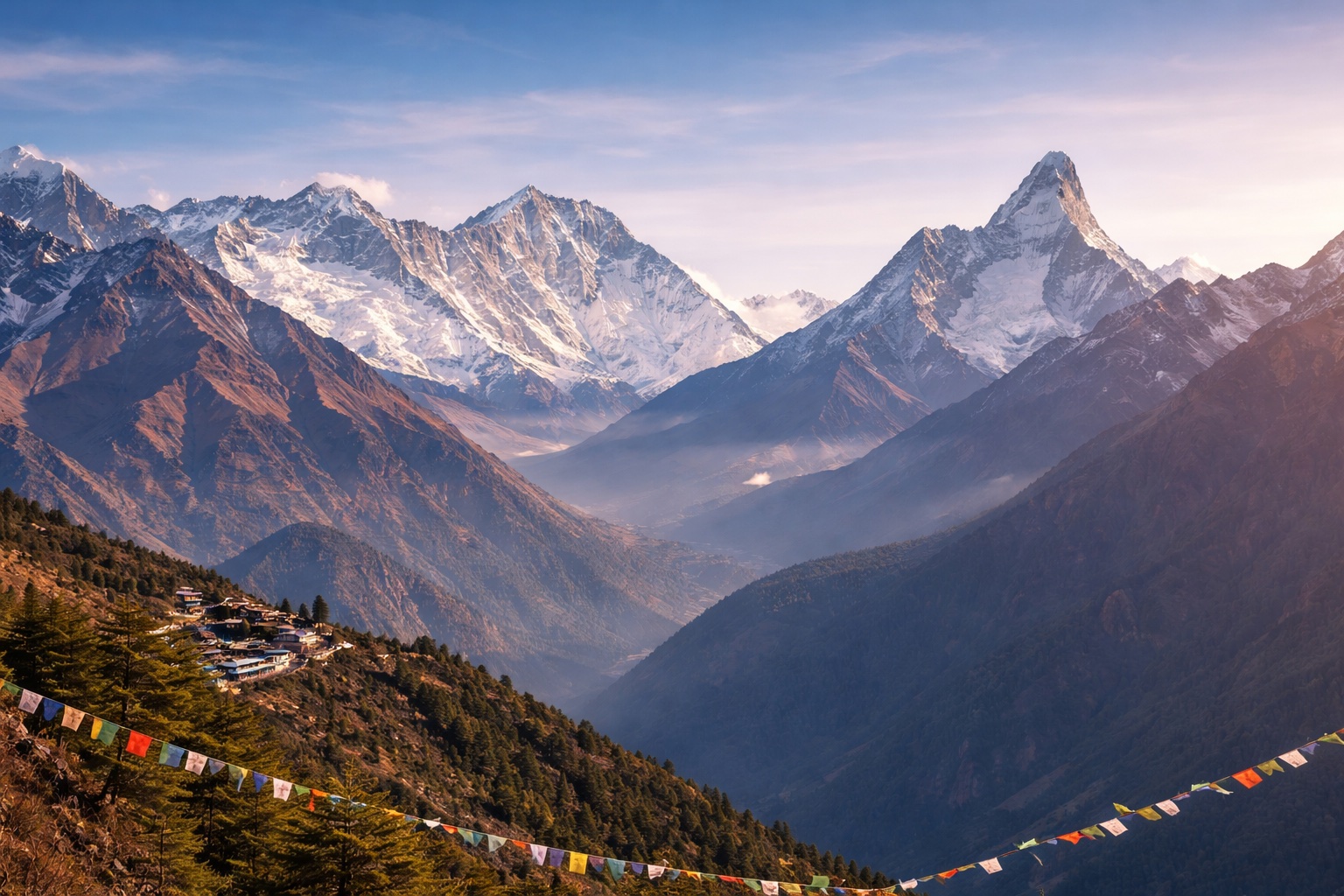
The Everest Region Trek with Island Peak Expedition is one of Nepal’s most spectacular and rewarding journeys, taking you deep into the heart of the Himalayas. The route offers high-altitude landscapes, vast glaciers, and breathtaking views of iconic peaks. Mount Everest (8,848.86 m), the world’s highest mountain, is known as Sagarmatha in Nepali and Chomolungma in Sherpa (Tibetan), and is considered sacred by the local Sherpa people.
The adventure begins with a scenic flight from Kathmandu to Lukla, a bustling Sherpa town and the main gateway to the region. From Lukla, the trail follows the north-flowing Dudh Koshi River, crosses the famous Hillary suspension bridges, and passes through traditional Sherpa villages before reaching Namche Bazaar, the vibrant Sherpa capital. Along the way, trekkers pass through picturesque villages, stone-walled fields, and lush valleys, experiencing the rich Sherpa culture with ancient monasteries, mani stones, and chortens.
The expedition continues towards Island Peak Base Camp, where climbers prepare for the summit attempt. The climb involves glacier trekking, rocky ridges, and fixed ropes, rewarding those who reach the top with spectacular views of Everest, Lhotse, Ama Dablam, Nuptse, and Makalu. After the summit, the descent leads back to Base Camp and then down through the trail to Chhukung or other nearby villages. The journey concludes in Lukla, leaving lasting memories of towering Himalayan peaks, thrilling adventure, and the extraordinary landscapes of the Everest region.
Arrive Kathmandu (1350m). Transfer to the hotel
Your memorable holiday begins in Kathmandu. After arrival, you will have time to freshen up before meeting your guide for an afternoon briefing. This is the perfect moment to organize your trekking gear and prepare your bags for the journey ahead.
Accommodation: Hotel. Meals included: morning
Transfer: 20 M drive hotel.
Kathmandu - Drive Ramechhap - Flight Lukla (2860 m) - Trek to Phakding (2610 m)
Early in the morning, we drive to Ramechhap, which takes about 4 to 5 hours depending on traffic. From Ramechhap, you take a short flight to Lukla, the main gateway to the Everest region. The trek starts from Lukla with a gentle walk through forests, over suspension bridges, and past Sherpa villages. After 3 to 4 hours, you reach Phakding, a riverside village and the first overnight stop.
Note: Flights to Lukla may be from Kathmandu or Ramechhap Airport due to airport congestion. If flight is cancelled because of bad weather, it will be rescheduled for the next day, and an extra night’s stay will be provided in Kathmandu or Ramechhap.
Accommodation: lodge. Meals included: morning noon evening.
Transport : 4/5 hours drive (Ramechhap), 25 minutes flight (Lukla).
Elevation gain: 200 m . Elevation loss : 450 m . 3/4 hours walking.
Phakding - Namche Bazaar (3440 m)
Today, we start with a pleasant walk through a pine forest along the river, followed by a short climb out of a narrow gorge. The permits are checked before entering into the Sagarmatha National Park entrance, then we cross the river on a suspension bridge. The trail goes through a wooded valley and crosses the river again before reaching the meeting point of the Thame and Khumbu rivers. A final high suspension bridge (Hillary Bridge) marks the start of a 1.5h climb to Namche Bazaar, with our first views of Everest on the way.
On arrival, we stay in a local lodge. Namche, once a quiet village, is now a busy trekking hub with bakeries, cafés, pubs and other comforts brought back by well-travelled Sherpas.
Accommodation: lodge. Meals included: morning noon evening.
Elevation gain: 1178 m. Elevation loss : 409 m. 6/7 hours walking.
Acclimatization day in Namche Bazaar
Today is the rest day to acclimatise and enjoy the area. This is also to hike to the Everest View Hotel (3,880 m) for beautiful views of the Himalaya.You can also explore Namche Bazaar - relax in a café, browse the market, or visit the Sherpa Museum to learn about local culture. We spend the two night in this famous mountain village.
Accommodation: lodge. Meals included: morning noon evening.
Elevation gain: 680 m. Elevation loss : 680 m. 6/7 hours walking.
Namche Bazaar - Tengboche (3860 m)
After breakfast, enjoy a short climb and stay along a well-maintained trail, built with tourist donations, giving the feel of walking on a natural balcony. You then descend through pine forests and cross the Dudh Koshi River via suspension bridges. At Phunki Thenga, the trail rises steeply through rhododendron and pine trees. The day ends in the peaceful village of Tengboche, surrounded by breathtaking natural scenery, from Tengboche.
Accommodation: lodge. Meals included: morning noon evening
Elevation gain: 921 m. Elevation loss : 700 m. 5/6 hours walking.
Tengboche - Dingboche (4410 m)
A perfect day following the Hillary Trail. Walk through lush forests and descend to the Imja River and cross it. Then gently ascend toward Dingboche; the climb is easy because it is not steep. Pass Pangboche village with views of Ama Dablam and Himalayan peaks. End the day in Dingboche with a warm welcome.
Accommodation: lodge. Meals included: morning noon evening
Elevation gain: 550 m . Elevation loss : 273 m. 6 hours walking.
Acclimatization day in Dingboche
The hike from Dingboche to Nagarjun Hill helps your body adjust to high altitude and prevents altitude sickness. The gentle climb allows your lungs and heart to adapt while you enjoy stunning Himalayan views. Optional visits around the village can also be done on this rest or acclimatization day.
Dingboche - Chhukung (4730 m) - Gear Preparation
Today is a short and scenic acclimatization day. We gradually walk through open yak pastures and glacial valleys, enjoying clear views of Ama Dablam, Lhotse, and Island Peak. The trail is gentle, with no steep climbs, as it follows the Imja Valley eastward. Passing stone-walled fields and crossing small streams, we arrive at the small village of Chhukung, surrounded by impressive peaks. After lunch, meet your climbing guide and check your summit gear in preparation for the climb ahead.
Accommodation: lodge. Meals included: morning noon evening
Elevation gain: 395 m . Elevation loss : 00 m. 3 hours walking
Chhukung - Island Peak Base Camp (5100 m) - Climbing Training
Leaving Chhukung, the trail heads south-east through the Imja Valley, climbing gradually over moraines and glacial streams. This is a short walking day, allowing time to rest and acclimatize. In the afternoon, there is a training session at Base Camp to practice essential climbing techniques and use of equipment in preparation for the ascent.
Accommodation: Tent. Meals included: morning noon evening
Elevation gain: 382 m . Elevation loss : 15 m. 4 hours walking.
Island Peak summit (6189 m) - Descend to Chhukung
Start very early, around midnight. Climb along rocky trails to the glacier, then up snowy slopes using fixed ropes. Reach the summit and enjoy stunning views of Lhotse, Ama Dablam, and the surrounding peaks. Descend safely back to Base Camp, have hot soup, rest briefly, then pack up and continue down to Chhukung. A long but highly rewarding day.
Accommodation: Lodge. Meals included: morning noon evening
Elevation gain: 1060 m. . Elevation loss: 2028 m. 8/11 hours walking.
Chhukung - Ama dablam base camp (4,570?m)
After breakfast, we head toward Ama Dablam Base Camp. While most trekkers follow the main Hillary Trail, we take a small path from Dingboche that crosses the Imja Khola and follows the river toward Ama Dablam. Today, we won’t encounter other trekkers, making this section a completely different and more adventurous experience.
Accommodation: lodge. Meals included: morning noon evening
Elevation gain: 360 m . Elevation loss : 510 m. 6 hours walking.
Ama Dablam Base Camp - Namche
Today, after exploring Ama Dablam Base Camp, we descend to Pangboche and retrace our route. However, the stretch between Kyangjuma and Namche always feels too short to fully enjoy the stunning scenery.
Namche - Lukla
The trail from Namche to Lukla is the same as before. As it’s the last night, it’s the perfect time to thank the porters, assistant guides and guide for their support. Most treks end with dancing, drinks, and celebrations, sharing memories together as a group.
Accommodation: lodge. Meals included: morning noon evening
Elevation gain: 600 m . Elevation loss : 1180 m . 6/7 hours walking.
Lukla - Ramechhap, then drive to Kathmandu
The day starts with morning flight to Ramechhap, offering final views of the Himalayas. From there, we enjoy a scenic drive back to Kathmandu. The rest of the day is free to relax, explore, or shop.
Accommodation: Hotel. Meals included: morning afternoon.
Transport :30 minutes flight (Ramechhap), 4/5 hours drive by jeep (Kathmandu)
Kathmandu - Souvenirs day | Sightseeing Day.
If you choose sightseeing, this full-day cultural tour offers a well-rounded experience of Kathmandu’s history, spirituality, and art, guided by a certified expert who will enrich your understanding of the city’s unique heritage.
Suggested itinerary (maximum three sites per day):
- SwayambunathThe price includes a certified cultural guide, a reserved vehicle, and a professional driver for the day.
Pricing per person:
2 - 3 People: €70Final Departure / Back to Native Land
According to your flight schedule, we will drive you to the airport for your onwards journey.
Other journeys you may also like, hand-picked to match this trip.